
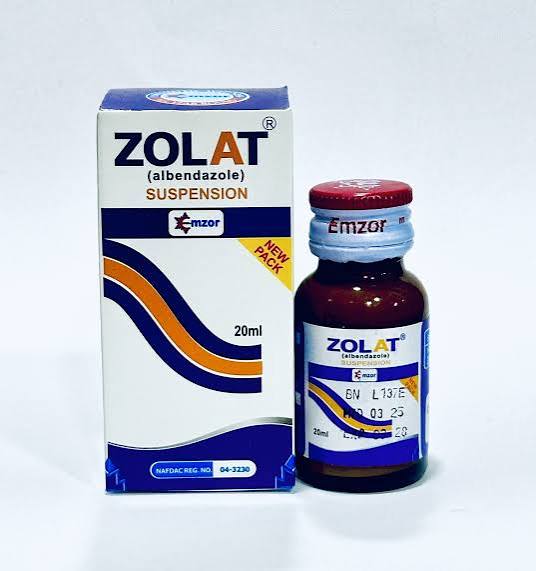
Zolat is a brand-name anthelmintic (anti-worm) medication manufactured by Emzor Pharmaceutical Industries. It contains Albendazole as its active ingredient and is used to treat a broad spectrum of intestinal and systemic parasitic worm infections.
Active Ingredient & Mechanism of Action
-
Active Ingredient: Albendazole.
-
Mechanism: Albendazole acts as a broad-spectrum anthelmintic by binding to fungal and helminthic $\beta$-tubulin:
-
Inhibition of Microtubule Synthesis: It inhibits the polymerization of tubulin into microtubules inside the parasite’s intestinal cells.
-
Energy Depletion: Disruption of microtubules severely impairs glucose uptake and energy storage (glycogen depletion) in the worm, causing paralysis, cellular degeneration, and death.
-
Dosage Forms & Available Strengths
Zolat is supplied in several oral formulations designed for adults and children:
-
Chewable Caplets / Tablets: 400 mg single-dose strength.
-
Standard Tablets: 200 mg and 400 mg strengths.
-
Oral Suspension: 200 mg / 5 mL (20 mL bottle) liquid formulation, primarily used for young children.
Clinical Indications
Zolat is indicated for the treatment of single or mixed parasitic infections, including:
-
Intestinal Nematodes (Roundworms):
-
Ascaris lumbricoides (large roundworm)
-
Enterobius vermicularis (pinworm/threadworm)
-
Necator americanus / Ancylostoma duodenale (hookworm)
-
Trichuris trichiura (whipworm)
-
Strongyloides stercoralis
-
-
Cestodes (Tapeworms): Taenia species.
-
Systemic Tissue Infections (High-Dose / Prolonged Therapy): Neurocysticercosis (pork tapeworm brain infection) and Hydatid disease (Echinococcus infection).
Key Pharmacokinetics
-
Absorption: Poorly absorbed from the gastrointestinal tract ($< 5\%$) when taken on an empty stomach, which keeps the active drug in the lumen to target intestinal worms.
-
Food Effect: Co-administration with fatty meals increases systemic absorption by up to 5-fold, which is necessary when treating tissue or systemic infections (such as hydatid disease).
-
Metabolism & Elimination: Rapidly converted in the liver to its primary active metabolite, albendazole sulfoxide. Excreted mainly via bile into feces, with a minor portion eliminated through urine.
Administration Guidelines
-
Intestinal Worms: Often given as a single 400 mg dose (or 200 mg in younger children). In threadworm/pinworm infections, a repeat dose after 2 to 3 weeks is frequently recommended to prevent reinfection.
-
Systemic/Tissue Worms: Requires longer continuous daily courses (weeks to months) under direct medical supervision.
-
Method: Chewable formulations should be chewed completely or crushed before swallowing. Standard tablets may be swallowed whole with water.
Safety Profile & Considerations
-
Common Side Effects: Mild stomach pain, nausea, vomiting, dizziness, headache, and temporary elevation of liver enzymes.
-
Pregnancy Warning: Albendazole is teratogenic (can cause fetal harm). It is contraindicated during pregnancy. Women of childbearing age should ensure they are not pregnant before taking Zolat (administration within 7 days of the start of normal menstruation is recommended).
-
Precautions & Monitoring:
-
Liver Function: Prolonged high-dose therapy requires periodic monitoring of liver function tests.
-
Bone Marrow Suppression: Extended use can cause bone marrow toxicity (low white blood cells or platelets).
-
-
Key Drug Interactions:
-
Dexamethasone, Cimetidine, & Praziquantel: May increase blood levels of active albendazole sulfoxide.
-
Carbamazepine & Phenobarbital: May induce hepatic enzymes and reduce albendazole plasma levels.
-
Note: Zolat is a prescription-strength antiparasitic medication. Treatment dosage, duration, and safety screening should be determined under the guidance of a licensed healthcare provider.


Reviews
There are no reviews yet.