
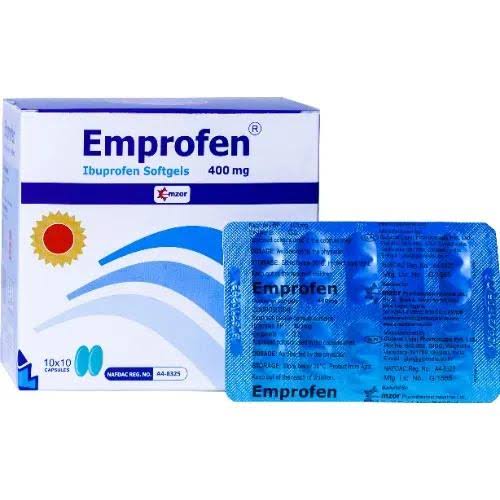
Ibuprofen is a widely used over-the-counter and prescription nonsteroidal anti-inflammatory drug (NSAID). Derived from propionic acid, it provides analgesic (pain-relieving), antipyretic (fever-reducing), and anti-inflammatory effects for a broad range of conditions.
Active Ingredient & Mechanism of Action
-
Active Ingredient: Ibuprofen.
-
Mechanism: Ibuprofen works by non-selectively inhibiting the cyclooxygenase (COX) enzymes: COX-1 and COX-2:
-
Inhibition of Prostaglandin Synthesis: By blocking COX enzymes, it stops the conversion of arachidonic acid into prostaglandins—lipid compounds that mediate inflammation, swelling, fever, and pain signaling.
-
Peripheral Action: Unlike acetaminophen, ibuprofen directly reduces localized tissue inflammation and swelling at the site of injury or disease.
-
Dosage Forms & Available Strengths
Ibuprofen is available in various oral, topical, and parenteral formulations:
-
Over-the-Counter (OTC) Oral Formulations: 200 mg tablets, caplets, or softgel liquid capsules.
-
Prescription Oral Formulations: 400 mg, 600 mg, and 800 mg tablets.
-
Pediatric Suspensions & Drops: 100 mg / 5 mL liquid suspensions or 50 mg / 1.25 mL infant drops.
-
Topical Formulations: Gels or creams (typically 5%) for localized joint or muscle pain.
-
Intravenous (IV) Infusion: Formulations used in hospital settings for acute pain or fever management.
Clinical Indications
-
Mild-to-Moderate Pain: Relief of headaches, dental pain, muscle aches, backaches, dysmenorrhea (menstrual cramps), and postoperative discomfort.
-
Fever Reduction: Lowering elevated body temperature in adults and children.
-
Inflammatory Conditions: Symptomatic management of rheumatoid arthritis, osteoarthritis, ankylosing spondylitis, tendonitis, and acute gout flares.
Key Pharmacokinetics
-
Absorption: Rapidly absorbed from the gastrointestinal tract, reaching peak plasma concentrations within 1 to 2 hours (faster with softgel liquid capsules).
-
Protein Binding & Distribution: High plasma protein binding ($> 99\%$, primarily to albumin). Distributes well into synovial fluid (joint spaces).
-
Metabolism & Elimination: Extensively metabolized by the liver via CYP2C9 into inactive metabolites. Elimination half-life is short, approximately 1.8 to 2 hours. It is excreted predominantly through the kidneys in urine.
Administration Guidelines & Dosing Limits
-
Food Requirement: Should ideally be taken with food, milk, or an antacid to minimize gastrointestinal irritation and stomach upset.
-
OTC Adult Dosing: 200 mg to 400 mg every 4 to 6 hours as needed.
-
Maximum Daily Dose Limits:
-
OTC Maximum Limit: 1,200 mg in 24 hours unless directed otherwise by a physician.
-
Prescription Maximum Limit: 3,200 mg in 24 hours (typically split into 600 mg or 800 mg doses taken 3 to 4 times daily under medical supervision).
-
-
Pediatric Dosing: Weight-based dosing at 5 to 10 mg/kg per dose every 6 to 8 hours (maximum 40 mg/kg per day).
Safety Profile & Critical Warnings
-
Boxed Warnings (Black Box Warnings):
-
Cardiovascular Risk: NSAIDs increase the risk of serious cardiovascular thrombotic events, including myocardial infarction (heart attack) and stroke. Risk increases with higher doses, prolonged use, or pre-existing heart disease.
-
Gastrointestinal Risk: Causes an increased risk of severe GI adverse events, including bleeding, ulceration, and perforation of the stomach or intestines, which can occur without warning.
-
-
Renal Risk (Kidney Toxicity): Long-term use or dehydration can impair renal blood flow, leading to fluid retention, elevated blood pressure, and acute kidney injury (renal papillary necrosis).
-
Common Side Effects: Dyspepsia (heartburn), abdominal pain, nausea, diarrhea, dizziness, and mild headache.
-
Pregnancy Warning: Contraindicated starting at 20 weeks of gestation (late pregnancy) because it can cause premature closure of the fetal ductus arteriosus and lower amniotic fluid levels (oligohydramnios).
-
Key Drug Interactions:
-
Aspirin / Blood Thinners (e.g., Warfarin, DOACs): Concurrent use dramatically increases gastrointestinal and systemic bleeding risks.
-
Antihypertensives (ACE Inhibitors, ARBs, Diuretics): Ibuprofen can diminish the blood-pressure-lowering effectiveness of these drugs and increase kidney toxicity risks.
-
Steroids (Corticosteroids) & SSRIs: Co-administration elevates gastrointestinal ulceration and bleeding risks.
-
Note: Ibuprofen is an over-the-counter and prescription NSAID. Dosage duration, maximum daily limits, and individual cardiovascular or gastrointestinal risk factors should be evaluated with a qualified healthcare provider or pharmacist.











Reviews
There are no reviews yet.