
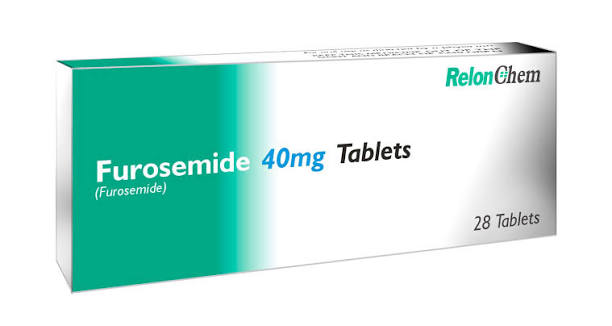
Furosemide (commonly known by the brand name Lasix) is a potent prescription medication belonging to the class of loop diuretics. It is widely used to treat fluid retention (edema) caused by heart failure, liver disease, or kidney disease, as well as to manage high blood pressure.
Active Ingredient & Mechanism of Action
-
Active Ingredient: Furosemide.
-
Mechanism: Furosemide acts directly on the thick ascending limb of the loop of Henle in the kidneys:
-
Inhibition of Electrolyte Reabsorption: It selectively blocks the $\text{Na}^+/\text{K}^+/2\text{Cl}^-$ co-transporter system, preventing the reabsorption of sodium, chloride, and water.
-
Increased Diuresis: By retaining these electrolytes in the tubular fluid, it causes a rapid and marked increase in urine production (diuresis) and fluid excretion.
-
Excretion of Other Ions: It also increases the excretion of potassium, magnesium, calcium, and hydrogen ions.
-
Dosage Forms & Available Strengths
Furosemide is available in multiple formulations to support both acute and long-term treatment:
-
Oral Tablets: Standard strengths include 20 mg, 40 mg, and 80 mg.
-
Oral Solution: 10 mg/mL and 40 mg/5 mL (commonly used for pediatric dosing or patients with swallowing difficulties).
-
Injectable Solution (IV/IM): 10 mg/mL vials for intravenous or intramuscular administration in emergency, acute, or hospital settings.
Clinical Indications
Furosemide is indicated for:
-
Edema Associated with Congestive Heart Failure: Reduces excess fluid accumulation in tissues and lungs (pulmonary edema).
-
Hepatic Cirrhosis: Management of fluid overload and ascites (abdominal fluid buildup) associated with liver dysfunction.
-
Renal Disease: Management of edema in patients with nephrotic syndrome or chronic kidney disease.
-
Hypertension: Used alone or in combination with other antihypertensive agents for blood pressure control (typically when fluid retention is present or in patients with impaired renal function).
-
Acute Pulmonary Edema: Rapid relief of acute fluid accumulation in the lungs via intravenous administration.
Key Pharmacokinetics
-
Onset of Action: Oral administration yields rapid diuresis within 30 to 60 minutes, peaking at around 1 to 2 hours. Intravenous administration acts within 5 minutes, peaking at 20 to 30 minutes.
-
Duration of Action: Short duration of action—approximately 6 to 8 hours for oral doses and 2 hours for intravenous administration.
-
Elimination: Extensively bound to plasma proteins; cleared through both renal excretion (mostly unchanged) and hepatic clearance.
Administration Guidelines
-
Oral Dosage: Administered once or twice daily. It is best taken in the morning (and early afternoon if twice daily) to prevent nighttime urination from disrupting sleep.
-
Food Effect: Food can slightly decrease oral absorption, so taking it on an empty stomach or with a consistent meal schedule is recommended.
Safety Profile & Considerations
-
Common Side Effects: Frequent urination, dehydration, dizziness, orthostatic hypotension (drop in blood pressure upon standing), headache, and electrolyte imbalances.
-
Electrolyte & Metabolic Disturbances: Risk of hypokalemia (low potassium), hyponatremia (low sodium), hypomagnesemia, hypocalcemia, and hyperuricemia (elevated uric acid, which can trigger gout).
-
Ototoxicity: High doses, rapid intravenous administration, or co-administration with other ototoxic drugs can cause transient or permanent hearing impairment and tinnitus.
-
Contraindications: Anuria (inability to produce urine) and severe, uncorrected electrolyte depletion or hepatic coma.
-
Key Drug Interactions:
-
Digoxin: Hypokalemia induced by furosemide significantly increases the risk of digitalis toxicity and cardiac arrhythmias.
-
Ototoxic Drugs (e.g., Aminoglycoside Antibiotics): Increased risk of severe hearing loss.
-
Nephrotoxic Drugs (e.g., NSAIDs, Radiocontrast Media): NSAIDs reduce diuretic efficacy and increase the risk of acute kidney injury.
-
Lithium: Decreases renal lithium clearance, leading to high risks of lithium toxicity.
-
Note: Furosemide is a potent, prescription-only medication. Dose adjustments and routine monitoring of fluid status, kidney function, and blood electrolyte levels must be conducted under the supervision of a licensed healthcare professional.










Reviews
There are no reviews yet.