
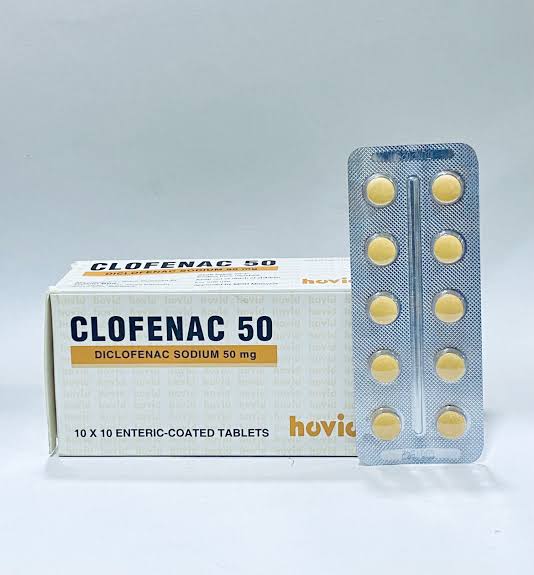
Diclofenac is a potent, widely prescribed nonsteroidal anti-inflammatory drug (NSAID) belonging to the phenylacetic acid class. It provides strong analgesic (pain-relieving), antipyretic (fever-reducing), and anti-inflammatory effects for acute and chronic painful or inflammatory conditions.
Active Ingredient & Mechanism of Action
-
Active Ingredient: Diclofenac (commonly formulated as Diclofenac Sodium or Diclofenac Potassium).
-
Mechanism: Diclofenac acts primarily by non-selectively inhibiting the cyclooxygenase (COX) enzymes: COX-1 and COX-2:
-
Inhibition of Prostaglandins: It blocks the synthesis of prostaglandins—chemical mediators that promote inflammation, swelling, fever, and pain signaling throughout body tissues.
-
COX-2 Selectivity Ratio: Compared to many other traditional non-selective NSAIDs (like ibuprofen or naproxen), diclofenac has a relatively higher affinity for the COX-2 enzyme, contributing to its strong anti-inflammatory potency.
-
Dosage Forms & Available Formulations
Diclofenac is available in a wide range of administrative routes and regional brand formulations (e.g., Voltaren, Cataflam):
-
Oral Tablets & Capsules:
-
Diclofenac Potassium (e.g., Cataflam): Immediate-release formulations (25 mg, 50 mg) designed for rapid absorption and fast onset of acute pain relief.
-
Diclofenac Sodium (e.g., Voltaren): Enteric-coated, delayed-release, or extended-release formulations (50 mg, 75 mg, 100 mg) designed for continuous, steady management of chronic inflammatory joint diseases.
-
-
Topical Formulations: Gels (e.g., Voltaren Emulgel 1% or 2.32%), patches, and solutions for localized joint and muscle pain.
-
Rectal Suppositories: 50 mg and 100 mg suppositories for post-operative pain or severe acute pain when oral administration is not feasible.
-
Intramuscular (IM) Injection / Intravenous (IV) Infusion: 75 mg / 3 mL ampoules used in hospital or acute care settings for renal colic, severe post-operative pain, or acute trauma.
-
Ophthalmic Drops: 0.1% drops used post-cataract surgery to prevent inflammation.
Clinical Indications
-
Arthritic Conditions: Symptomatic management of Osteoarthritis, Rheumatoid Arthritis, and Ankylosing Spondylitis.
-
Acute Musculoskeletal Disorders: Strains, sprains, tendinitis, bursitis, low back pain, and sports injuries.
-
Acute Pain Events: Renal colic (kidney stones), acute gout attacks, dysmenorrhea (severe period pain), dental pain, and post-surgical pain.
Key Pharmacokinetics
-
Absorption: Well absorbed from the gastrointestinal tract. Diclofenac potassium dissolves faster in the stomach, yielding faster peak plasma levels ($\sim 30\text{ to }60\text{ minutes}$) compared to enteric-coated diclofenac sodium ($\sim 1.5\text{ to }2.5\text{ hours}$).
-
First-Pass Metabolism: Undergoes extensive hepatic first-pass metabolism; only about 50% to 60% of an oral dose reaches systemic circulation unchanged.
-
Distribution & Protein Binding: High plasma protein binding ($> 99\%$, primarily to albumin). Accumulates and persists in synovial fluid (joints) at higher concentrations than in blood plasma over extended periods.
-
Elimination & Half-Life: Short plasma elimination half-life of 1 to 2 hours. Excreted primarily through the kidneys as glucuronide/sulfate conjugates in urine ($\sim 65\%$) and via bile/feces ($\sim 35\%$).
Administration Guidelines & Dosing Limits
-
Taking with Food: Oral tablets should be taken with or after meals with a full glass of water to minimize gastric irritation. Enteric-coated sodium tablets should be swallowed whole (never crushed or chewed).
-
Typical Adult Dosing:
-
Acute Pain / Primary Dysmenorrhea: 50 mg of diclofenac potassium 2 to 3 times daily.
-
Osteoarthritis / Rheumatoid Arthritis: 100 mg to 150 mg daily in divided doses (e.g., 50 mg 2 to 3 times daily or a single 100 mg extended-release tablet daily).
-
-
Maximum Daily Dose Limit: 150 mg in 24 hours for adults.
Safety Profile & Critical Warnings
-
Boxed Warnings (Black Box Warnings):
-
Cardiovascular Risk: Like other NSAIDs, diclofenac carries an increased risk of serious cardiovascular thrombotic events, including myocardial infarction (heart attack) and stroke. Due to its higher COX-2 activity, diclofenac carries a higher relative cardiovascular risk than naproxen or low-dose ibuprofen.
-
Gastrointestinal Risk: Elevated risk of severe GI adverse events, including stomach ulcers, gastrointestinal bleeding, and intestinal perforation, which can be fatal and may occur without warning symptoms.
-
-
Hepatic Safety: Can cause elevations in liver transaminase enzymes (ALT/AST). Periodic liver function monitoring is required during prolonged, high-dose therapy.
-
Renal Risk: Can impair renal blood flow, causing fluid retention, worsening hypertension, and acute kidney injury—especially in dehydrated patients or those with pre-existing renal disease.
-
Pregnancy Warning: Strictly contraindicated from 20 weeks of pregnancy onward (can cause premature closure of the fetal ductus arteriosus, neonatal pulmonary hypertension, and oligohydramnios).
-
Key Drug Interactions:
-
Anticoagulants (e.g., Warfarin, DOACs, Aspirin): Greatly elevates gastrointestinal and systemic bleeding risks.
-
Antihypertensives (ACE Inhibitors, ARBs, Beta-Blockers, Diuretics): Diminishes their blood-pressure-lowering effectiveness and increases kidney toxicity risks.
-
Lithium & Methotrexate: Inhibits renal clearance of these drugs, increasing the risk of toxic drug accumulation.
-
Other NSAIDs / Corticosteroids: Concurrent use increases gastrointestinal ulceration risk without therapeutic benefit.
-
Note: Diclofenac is a prescription and pharmacy-regulated medication depending on formulation and regional regulations. Dosage schedules, duration of use, and individual cardiovascular, hepatic, or renal risk factors must be thoroughly evaluated by a qualified healthcare professional.









Reviews
There are no reviews yet.