
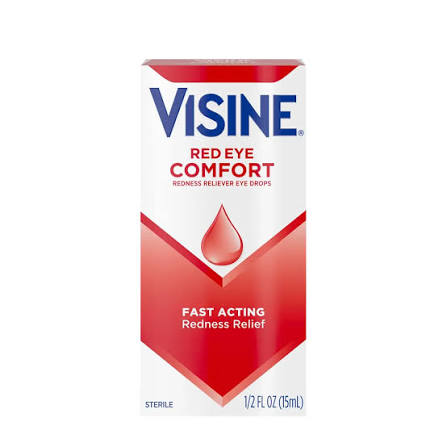
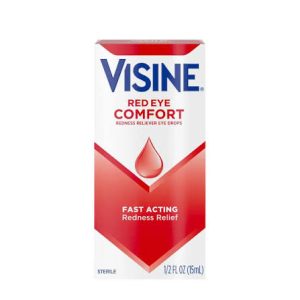
Visine is a well-known brand of over-the-counter ophthalmic (eye) drops primarily used to clear redness, relieve irritation, and soothe dry or allergic eyes.
While Visine offers several specialized formulations, its standard redness-relief product relies on a topical decongestant / vasoconstrictor to narrow swollen blood vessels on the surface of the eye.
Active Ingredients & Common Formulations
Visine manufactures several targeted formulas:
-
Visine Original / Redness Relief:
-
Active Ingredient: Tetrahydrozoline Hydrochloride (0.05%).
-
Mechanism: An $\alpha$-adrenergic agonist that constricts dilated superficial blood vessels (conjunctival vessels), quickly reducing blood flow to turn red eyes clear white.
-
-
Visine A / Allergy Relief:
-
Active Ingredients: Tetrahydrozoline HCl (decongestant) + Pheniramine Maleate (antihistamine).
-
Mechanism: Clears redness while blocking histamine receptors to relieve allergic itching, watering, and swelling.
-
-
Visine Dry Eye Relief / Lubricating Drops:
-
Active Ingredients: Lubricants like Polyethylene Glycol 400, Glycerin, or Hypromellose.
-
Mechanism: Replenishes moisture on the ocular surface without using blood-vessel constrictors.
-
Indications
Visine drops are used for temporary, short-term relief of minor eye discomfort caused by:
-
Minor irritants (smokey environments, wind, dust, chlorinated water).
-
Eye strain or fatigue (extended screen time).
-
Environmental allergic reactions (pollen, ragweed, pet dander).
-
Temporary redness from lack of sleep.
The Critical “Rebound Redness” Warning
-
The 72-Hour Limit: Redness-relieving drops containing Tetrahydrozoline should never be used for more than 3 consecutive days (72 hours).
-
Rebound Hyperemia (Medicamentosa): Frequent or prolonged use causes the eye’s blood vessels to become desensitized. When the drug wears off, the vessels dilate even wider than before, making the eye appear more red and irritated. This creates a cycle of dependency on the drops.
Administration & Safety Guidelines
-
How to Apply: Tilt head back, pull down the lower eyelid to create a small pocket, and instill 1 to 2 drops into the affected eye(s) up to 4 times daily.
-
Contact Lens Users: Remove contact lenses before applying Visine drops containing Tetrahydrozoline or preservatives. Wait at least 15 minutes before reinserting lenses, as the ingredients can bind to lens materials and cause localized irritation.
-
Toxicity Danger (Keep Away from Children): Tetrahydrozoline is highly toxic if ingested orally. Swallowing even a small amount of Visine can cause severe medical emergencies in young children, including dangerously slow heart rate (bradycardia), low blood pressure, severe drowsiness, or respiratory depression.
Precautions & Contraindications
-
Narrow-Angle Glaucoma: Contraindicated in individuals with narrow-angle glaucoma, as vasoconstrictors can precipitate acute angle-closure attacks.
-
Underlying Conditions: Consult a doctor before use if you have hypertension (high blood pressure), cardiovascular disease, hyperthyroidism, or diabetes.
-
When to See a Doctor: Seek immediate medical evaluation if you experience severe eye pain, changes in vision, persistent redness, or discharge, as these may indicate an infection, corneal injury, or more serious ophthalmic disease.






Reviews
There are no reviews yet.