
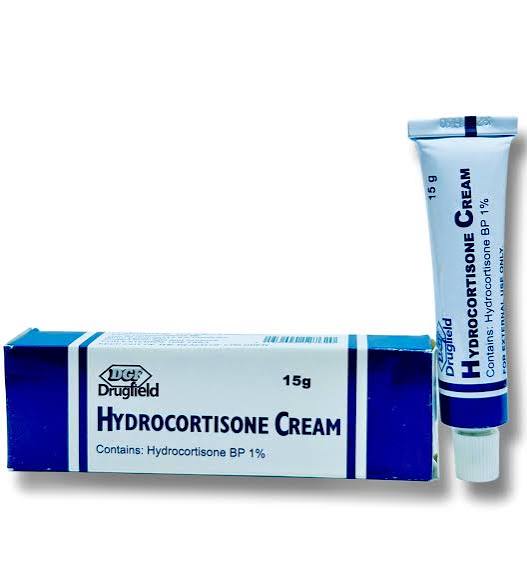
Hydrocortisone is a short-acting corticosteroid that is chemically identical to cortisol, the primary hormone naturally produced by the human adrenal cortex. It serves two distinct medical roles: as physiological hormone replacement therapy for adrenal insufficiency, and as an anti-inflammatory / immunosuppressive agent across various body systems.
Active Ingredient & Mechanism of Action
-
Active Ingredient: Hydrocortisone (Cortisol).
-
Mechanism: Hydrocortisone diffuses into target cells and binds to intracellular glucocorticoid receptors:
-
Anti-Inflammatory & Immunosuppressive Action: Suppresses pro-inflammatory cytokines, chemokines, and inflammatory enzymes (like COX-2), while inhibiting white blood cell migration and vascular permeability.
-
Mineralocorticoid Activity: Unlike synthetic steroids (such as dexamethasone or prednisone), hydrocortisone retains significant sodium-retaining (mineralocorticoid) activity. This helps regulate fluid and electrolyte balance ($Na^+$ retention and $K^+$ excretion) in the kidneys.
-
Available Formulations & Strengths
Hydrocortisone is formulated across virtually all major pharmaceutical routes:
-
Oral Tablets (e.g., Cortef): 5 mg, 10 mg, and 20 mg tablets.
-
Topical Formulations (Creams, Ointments, Lotions): 0.5% to 1% over-the-counter (OTC) and 2.5% prescription strengths for dermatological use.
-
Injectable Solution (e.g., Solu-Cortef): 100 mg, 250 mg, and 500 mg vials for intravenous (IV) or intramuscular (IM) administration in acute or emergency settings.
-
Rectal Suppositories & Enemas (e.g., Anusol-HC, Cortenema): Used for localized gastrointestinal or anorectal inflammation.
Clinical Indications
Hydrocortisone is indicated across several clinical settings:
-
Adrenal Insufficiency (Primary Replacement): Primary adrenal insufficiency (Addison’s disease), secondary adrenal insufficiency, and congenital adrenal hyperplasia (CAH).
-
Acute Adrenal Crisis: Emergency IV management of sudden, life-threatening drops in cortisol levels caused by stress, trauma, or infection in adrenal-deficient patients.
-
Dermatological Conditions (Topical): Temporary relief of itching, swelling, and redness associated with eczema, psoriasis, contact dermatitis, insect bites, and allergic rashes.
-
Inflammatory & Autoimmune Flare-ups: Acute severe asthma, severe allergic reactions, rheumatoid arthritis, and ulcerative colitis.
Key Pharmacokinetics
-
Absorption: Rapidly and completely absorbed from the gastrointestinal tract following oral administration. Topical absorption depends on skin integrity and whether an occlusive dressing is used.
-
Protein Binding: Highly bound ($\sim 90\%$) to plasma proteins, primarily corticosteroid-binding globulin (CBG / transcortin) and albumin.
-
Metabolism & Half-Life: Metabolized rapidly in the liver into inactive tetrahydrocortisol and tetrahydrocortisone. It has a short plasma half-life of 1.5 to 2 hours and a short biological anti-inflammatory half-life of 8 to 12 hours.
-
Elimination: Excreted almost entirely by the kidneys in urine as conjugated metabolites.
Administration Guidelines
-
Oral Administration: Take tablets with food or milk to prevent gastric irritation. When used for adrenal replacement, doses are usually split (e.g., a larger dose in the morning upon waking and a smaller dose in the afternoon) to mimic the body’s natural circadian cortisol rhythm.
-
Topical Usage: Apply a thin layer to clean, dry skin. Do not use occlusive coverings unless specifically instructed by a doctor. Avoid applying high-strength topical hydrocortisone to the face or skin folds for extended periods.
-
Crucial Rule — Stress Dosing & Tapering:
-
Sick-Day Rules: Patients with adrenal insufficiency taking daily oral hydrocortisone must double or triple their oral dose during minor illness/fever, or switch to IV/IM hydrocortisone during severe trauma, vomiting, or surgery.
-
Gradual Tapering: Extended systemic therapy (longer than 2 to 3 weeks) suppresses the hypothalamic-pituitary-adrenal (HPA) axis. Sudden cessation can trigger an adrenal crisis. Systemic doses must be gradually tapered under medical supervision.
-
Safety Profile & Considerations
-
Short-Term Side Effects: Mild stomach upset, increased appetite, temporary fluid retention/swelling, mild elevation in blood pressure, and sleep disturbances.
-
Long-Term / High-Dose Systemic Risks:
-
Metabolic & Endocrine: Cushingoid features (“moon face”, central weight gain), steroid-induced hyperglycemia/diabetes, growth suppression in children, and secondary adrenal suppression.
-
Electrolyte Imbalance: Sodium and water retention, fluid buildup (edema), high blood pressure, and potassium loss (hypokalemia).
-
Immunosuppression: Increased risk of bacterial, fungal, or viral infections.
-
Bone & Skin: Osteoporosis, skin thinning, easy bruising, and delayed wound healing.
-
-
Topical Safety Considerations: Prolonged use of high-potency topical hydrocortisone can lead to localized skin atrophy (thinning), striae (stretch marks), telangiectasia (spider veins), and topical steroid withdrawal reactions.
-
Key Drug Interactions:
-
CYP3A4 Inducers (e.g., Phenytoin, Carbamazepine, Rifampicin): Increase hydrocortisone clearance, lowering its effectiveness and necessitating higher doses.
-
CYP3A4 Inhibitors (e.g., Ketoconazole, Erythromycin): Decrease hydrocortisone clearance, elevating plasma levels and side effect risks.
-
NSAIDs & Aspirin: Concomitant systemic use increases gastrointestinal ulceration and bleeding risks.
-
Diuretics: Co-administration with potassium-depleting diuretics (e.g., furosemide, thiazides) increases the risk of severe hypokalemia.
-
Antidiabetics: Hydrocortisone can elevate blood sugar levels, requiring dose adjustments for insulin or oral hypoglycemics.
-
Note: Hydrocortisone is a regulated prescription and over-the-counter medication depending on strength and formulation. Dosing schedules, sick-day adjustments, and long-term safety monitoring should be strictly managed under the guidance of a qualified healthcare professional.






Reviews
There are no reviews yet.