
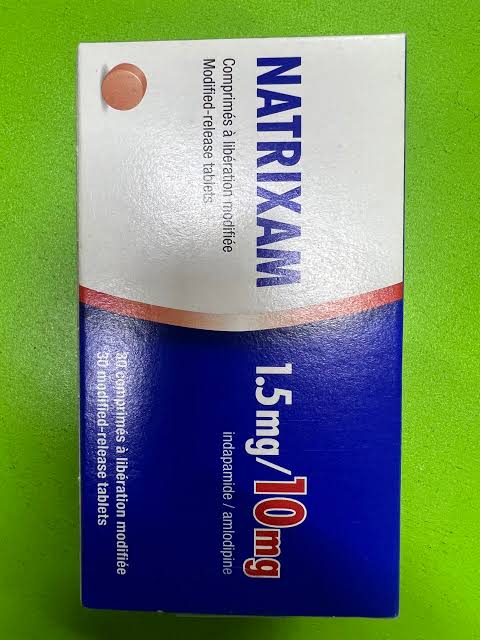
Natrixam is a prescription fixed-dose combination antihypertensive drug developed by Servier. It combines two complementary blood pressure-lowering agents—Indapamide (a thiazide-like diuretic) and Amlodipine (a calcium channel blocker)—into a single modified-release tablet.
Active Ingredients & Dual Mechanism of Action
Natrixam targets two distinct physiological pathways to provide sustained 24-hour blood pressure reduction:
-
Indapamide (1.5 mg, modified-release): A thiazide-like sulfonamide diuretic that inhibits sodium reabsorption in the cortical dilution segment of the renal tubules. It increases urinary excretion of sodium and water, reducing overall intravascular fluid volume. Additionally, indapamide exerts a direct vasodilatory effect on vascular smooth muscle, lowering total peripheral resistance over long-term use.
-
Amlodipine Besylate (5 mg or 10 mg): A dihydropyridine calcium channel blocker that inhibits the influx of extracellular calcium ions into vascular smooth muscle and cardiac cells. This causes direct relaxation and vasodilation of peripheral arteries, reducing cardiac afterload and peripheral vascular resistance.
Synergistic Effect: Combining vascular relaxation from amlodipine with the volume-reducing and vasodilatory properties of indapamide delivers effective, multi-pathway blood pressure control with enhanced convenience.
Available Strengths & Dosage Forms
Natrixam is formulated as modified-release, film-coated bilayer tablets:
-
Natrixam 1.5 mg / 5 mg: 1.5 mg Indapamide + 5 mg Amlodipine
-
Natrixam 1.5 mg / 10 mg: 1.5 mg Indapamide + 10 mg Amlodipine
Clinical Indications
Natrixam is indicated for:
-
Essential Hypertension: Substitution therapy in adult patients whose blood pressure is already adequately controlled on indapamide (1.5 mg) and amlodipine (5 mg or 10 mg) taken concurrently as separate tablets at the same dose levels.
Key Pharmacokinetics
-
Absorption: Both active substances are well-absorbed following oral administration. Indapamide is released gradually via the modified-release formulation, reaching peak concentration in about 12 hours. Amlodipine reaches peak concentration within 6 to 12 hours.
-
Duration of Action: Maintains smooth, continuous 24-hour blood pressure regulation with once-daily dosing.
-
Elimination: Indapamide is excreted in urine and feces primarily as metabolites; amlodipine is extensively metabolized by the liver (CYP3A4) and excreted in urine.
Administration Guidelines
-
Usage: Administered orally once daily, preferably in the morning.
-
Method: The tablet must be swallowed whole with water and not chewed, broken, or crushed, to maintain its modified-release characteristics.
Safety Profile & Considerations
-
Common Side Effects: Dizziness, somnolence, headache, peripheral edema (ankle swelling), fatigue, palpitations, flushing, nausea, and hypokalemia (low blood potassium).
-
Contraindications:
-
Severe renal impairment or failure.
-
Severe hepatic impairment or hepatic encephalopathy.
-
Hypokalemia (pre-existing low blood potassium).
-
Known hypersensitivity to indapamide, amlodipine, other sulfonamide derivatives, or dihydropyridines.
-
Severe hypotension, shock, or left ventricular outflow tract obstruction (e.g., high-grade aortic stenosis).
-
-
Key Precautions & Interactions:
-
Electrolyte Monitoring: Serum potassium and sodium levels should be routinely checked due to indapamide.
-
Grapefruit / Grapefruit Juice: Should be avoided as it can increase amlodipine bioavailability and the risk of hypotension.
-
Lithium: Concurrent use with indapamide is generally not recommended due to increased risk of lithium toxicity.
-
NSAIDs: Non-steroidal anti-inflammatory drugs may diminish the antihypertensive effect and increase the risk of acute renal dysfunction.
-
Note: Natrixam is a prescription-only medication. Dosing, substitution, and routine monitoring must strictly follow the supervision of a licensed healthcare professional.









Reviews
There are no reviews yet.