
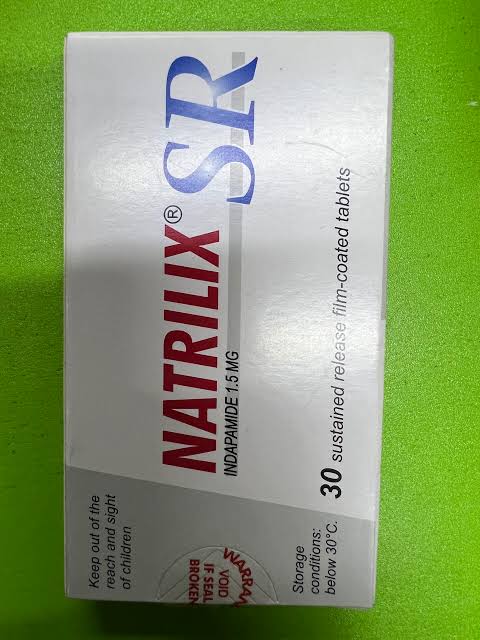
Natrilix SR is a prescription cardiovascular medication manufactured by Servier. It contains indapamide as its active ingredient and belongs to the thiazide-like (sulfonamide) diuretic class. Formulated using a matrix-based prolonged-release system, it progressively releases the active agent over a 24-hour period to maintain consistent blood pressure control.
Active Ingredient & Mechanism of Action
-
Active Ingredient: Indapamide (1.5 mg).
-
Mechanism: Indapamide acts primarily on the cortical dilution segment of the distal convoluted tubules in the kidneys:
-
Electrolyte Clearance: It inhibits the reabsorption of sodium and chloride, increasing their excretion alongside mild fluid elimination. Unlike conventional loop or high-ceiling diuretics, indapamide produces only a modest diuretic effect at therapeutic doses.
-
Direct Vasodilation: Over long-term use, its primary blood pressure-lowering effect is mediated by improving arterial compliance and reducing total peripheral vascular resistance.
-
Target End-Organ Protection: Helps reduce left ventricular hypertrophy associated with chronic hypertension.
-
Dosage Forms & Available Strengths
Natrilix SR is supplied in a single standardized oral formulation:
-
Natrilix SR 1.5 mg Prolonged-Release Tablets: White, round, film-coated matrix tablets designed for sustained delivery over 24 hours.
Clinical Indications
Natrilix SR is indicated for:
-
Essential Hypertension: Management of primary high blood pressure in adult patients. It can be used as monotherapy or combined with other antihypertensive agents (e.g., ACE inhibitors, calcium channel blockers, or beta-blockers).
Key Pharmacokinetics
-
Absorption: Completely absorbed from the gastrointestinal tract following oral administration.
-
Peak Plasma Levels ($C_{max}$): Reached approximately 12 hours post-ingestion due to the slow-release matrix system.
-
Half-Life & Elimination: Elimination half-life ranges from 14 to 24 hours (mean ~18 hours). Steady state is achieved within 7 days of daily administration. Approximately 70% is eliminated via the kidneys and 22% via feces, primarily as inactive metabolites.
Administration Guidelines
-
Usage: Administered orally once daily (1 tablet every 24 hours), preferably in the morning.
-
Method: Must be swallowed whole with water. Do not chew, break, or crush the tablet, as damaging the film matrix destroys its sustained-release properties.
-
Dose Escalation Note: Increasing the dose beyond 1.5 mg daily does not significantly increase antihypertensive efficacy but increases the risk of electrolyte imbalances.
Safety Profile & Considerations
-
Common Side Effects: Headache, fatigue, dizziness, muscle cramps, skin rashes, gastrointestinal discomfort, and low blood potassium levels (hypokalemia).
-
Metabolic & Neutral Profile: Unlike standard thiazide diuretics, indapamide at the 1.5 mg sustained-release dose does not significantly impair carbohydrate metabolism (glucose levels) or lipid profiles (triglycerides, HDL, LDL).
-
Contraindications:
-
Severe renal failure (creatinine clearance below 30 mL/min).
-
Severe hepatic impairment or hepatic encephalopathy.
-
Pre-existing severe hypokalemia.
-
Known hypersensitivity to indapamide, other sulfonamide-derived drugs, or formulation excipients (contains lactose monohydrate).
-
-
Key Drug Interactions:
-
Lithium: Concomitant use decreases renal lithium clearance, leading to elevated serum lithium levels and heightened toxicity risks.
-
Torsades de Pointes–Inducing Drugs (e.g., certain antiarrhythmics): Hypokalemia induced by diuretics increases the risk of serious ventricular arrhythmias.
-
NSAIDs: May reduce the blood pressure-lowering effect of indapamide and increase the risk of acute renal function decline.
-
Note: Natrilix SR is a prescription-only drug. Treatment, patient monitoring, and electrolyte testing should be managed under the supervision of a licensed healthcare professional.








Reviews
There are no reviews yet.