
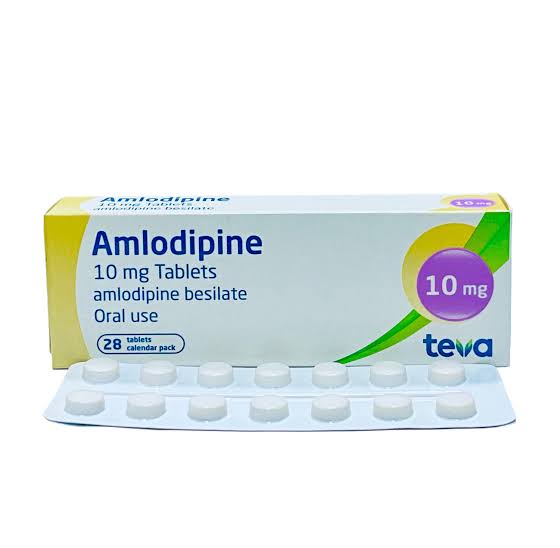
Amlodipine (Teva) is a widely prescribed prescription medication belonging to the dihydropyridine class of calcium channel blockers (CCBs). Formulated for oral administration, it is primarily indicated for the management of hypertension (high blood pressure) and various forms of angina pectoris (chest pain). By relaxing vascular smooth muscle, Amlodipine reduces peripheral vascular resistance and optimizes myocardial oxygen supply.
Active Ingredient & Mechanism of Action
-
Active Ingredient: Amlodipine besylate (equivalent to amlodipine free base).
-
Mechanism: Amlodipine selectively inhibits the transmembrane influx of calcium ions into cardiac muscle and vascular smooth muscle cells. Because vascular smooth muscle is more sensitive to calcium channel blockage than heart muscle, Amlodipine acts primarily as a arterial vasodilator:
-
In Hypertension: It directly relaxes peripheral vascular smooth muscle, decreasing peripheral resistance and lowering systemic blood pressure.
-
In Angina: It decreases total peripheral resistance (afterload) against which the heart works, reducing myocardial energy consumption and oxygen demand. It also dilates major coronary arteries, improving oxygen delivery to ischemic myocardium.
-
Available Strengths & Dosage Forms
Amlodipine (Teva) is manufactured in standard oral tablet form and is available in two main strengths:
-
Amlodipine 5 mg Tablets: Typically prescribed as the standard starting dose for adult hypertension and angina.
-
Amlodipine 10 mg Tablets: Prescribed when the target blood pressure or clinical response is not achieved with the initial 5 mg dose.
Note: In elderly patients or those with hepatic insufficiency, a lower initial dosage of 2.5 mg daily may be recommended.
Clinical Indications
Amlodipine (Teva) is indicated for:
-
Essential Hypertension: Used as monotherapy or in combination with other antihypertensive agents (such as thiazide diuretics, ACE inhibitors, or ARBs) to lower blood pressure and reduce the risk of fatal and non-fatal cardiovascular events, primarily strokes and myocardial infarctions.
-
Chronic Stable Angina: For the symptomatic relief and long-term treatment of stable angina pectoris.
-
Vasospastic Angina (Prinzmetal’s or Variant Angina): Used as monotherapy or in combination with other antianginal drugs to prevent coronary artery vasospasms.
Key Pharmacokinetics
-
Absorption: Well-absorbed after oral administration, reaching peak blood concentration within 6 to 12 hours. Absorption is not significantly affected by food intake.
-
Half-Life: Long elimination half-life of approximately 30 to 50 hours, allowing for effective once-daily dosing.
-
Steady State: Blood concentration steady states are achieved after 7 to 8 days of consecutive daily administration.
-
Metabolism: Extensively metabolized by the liver via the cytochrome P450 (CYP3A4) system, with inactive metabolites excreted mainly through urine.
Administration & Dosage
-
Usage: Administered orally once daily, with or without food, at approximately the same time each day.
-
Adherence: Should be taken regularly as prescribed. Sudden discontinuation should be avoided unless advised by a healthcare provider.
Safety Profile & Considerations
-
Common Side Effects: Peripheral edema (swelling of ankles or feet), dizziness, flushing, palpitations, fatigue, and abdominal pain.
-
Precautions:
-
Hepatic Impairment: Requires careful titration due to extended half-life in patients with impaired liver function.
-
Severe Aortic Stenosis: Use with caution due to the risk of acute hypotension.
-
Heart Failure: Should be used cautiously in patients with severe heart failure (NYHA Class III-IV).
-
-
Drug Interactions: May interact with strong CYP3A4 inhibitors (e.g., ketoconazole, ritonavir), simvastatin (max 20 mg simvastatin daily recommended when co-administered), and immunosuppressants like tacrolimus.
Note: Amlodipine (Teva) is a prescription medicine. Treatment should only be initiated, adjusted, and monitored under the supervision of a licensed healthcare professional.










Reviews
There are no reviews yet.