
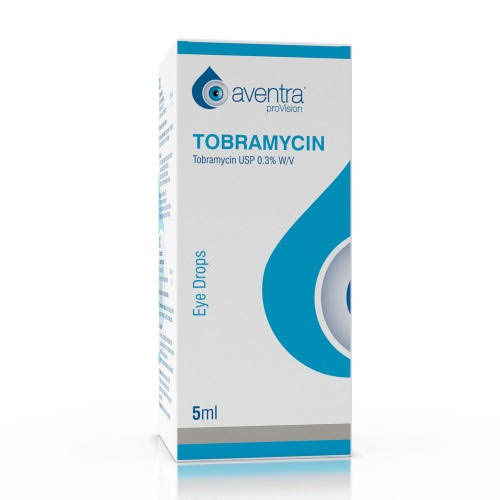
Tobramycin is a potent, broad-spectrum aminoglycoside antibiotic derived from Streptomyces tenebrarius. It functions as a bactericidal drug with particular potency against aerobic Gram-negative bacilli, most notably Pseudomonas aeruginosa.
Active Ingredient & Mechanism of Action
-
Active Ingredient: Tobramycin sulfate.
-
Mechanism:
-
Binds to the 30S Ribosomal Subunit: Tobramycin irreversibly binds to the 30S ribosomal subunit of susceptible bacteria.
-
Inhibits Protein Synthesis: This interferes with the initiation complex, misreads mRNA, and prevents peptide chain elongation, halting functional protein production.
-
Disrupts Bacterial Cell Wall: Nonfunctional, misfolded proteins insert into the bacterial cell membrane, increasing permeability and causing cell lysis and bacterial death.
-
Dosage Forms & Common Formulations
-
Ophthalmic Drops & Ointments (0.3% w/v): Widely used topically for superficial eye infections (e.g., Tobrex, Tobradex when combined with dexamethasone).
-
Inhalation Solution & Powder (TOBI, Kitabis): Inhaled via nebulizer or dry-powder inhaler (300 mg/5 mL) to treat chronic pulmonary infections in patients with cystic fibrosis.
-
Parenteral Injection (IV / IM): Systemic solution (usually 10 mg/mL or 40 mg/mL vials) administered in hospital settings for serious body infections.
Clinical Indications
-
Ocular Infections: Bacterial conjunctivitis, keratitis, blepharitis, and dacryocystitis.
-
Cystic Fibrosis Management: Inhaled tobramycin is a standard maintenance therapy to suppress and treat chronic Pseudomonas aeruginosa lung infections in patients aged $\ge 6$ years.
-
Severe Systemic Infections: IV/IM administration for broad-spectrum coverage in complicated urinary tract infections (pyelonephritis), intra-abdominal infections, bone/joint infections, sepsis, and hospital-acquired pneumonia.
Key Pharmacokinetics
-
Absorption: Poor oral absorption (requires IV, IM, inhalation, or topical application for systemic or localized effects).
-
Distribution: Hydrophilic property limits distribution primarily to extracellular fluids. Crosses placenta; poor entry into CSF unless meninges are inflamed.
-
Elimination: Excreted virtually unchanged by the kidneys via glomerular filtration. Half-life is approximately 2 to 3 hours in adults with normal renal function.
Critical Warnings & Toxicity (Systemic Formulations)
Like other systemic aminoglycosides, IV/IM tobramycin carries narrow therapeutic windows and specific risks:
-
Nephrotoxicity (Kidney Damage): Direct damage to proximal renal tubules. Requires routine Therapeutic Drug Monitoring (TDM) of serum peak/trough levels and monitoring of serum creatinine/BUN.
-
Ototoxicity (Ear Damage): Risk of irreversible auditory (hearing loss/tinnitus) and vestibular (dizziness/vertigo) damage. Risk is heightened by elevated trough levels, prolonged treatment, or concurrent use of loop diuretics (e.g., Furosemide).
-
Neuromuscular Blockade: Can exacerbate muscle weakness or cause respiratory depression, particularly when co-administered with neuromuscular blockers or in patients with myasthenia gravis.




Reviews
There are no reviews yet.