
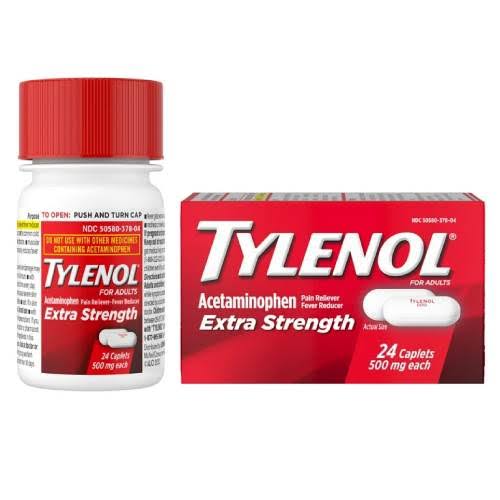
Acetaminophen (commonly known as Paracetamol outside the United States and Canada, and widely known by brand names such as Tylenol) is an over-the-counter and prescription analgesic (pain reliever) and antipyretic (fever reducer). Unlike nonsteroidal anti-inflammatory drugs (NSAIDs) like ibuprofen or aspirin, acetaminophen has minimal anti-inflammatory activity.
Active Ingredient & Mechanism of Action
-
Active Ingredient: Acetaminophen ($N\text{-acetyl-}p\text{-aminophenol}$ or APAP).
-
Mechanism: The precise mechanism is multifaceted and distinct from classical NSAIDs:
-
Central COX Inhibition: It acts primarily within the central nervous system (CNS), inhibiting cyclooxygenase (COX) enzymes to reduce prostaglandin synthesis in the brain, thereby blunting pain signaling and resetting the hypothalamic heat-regulating center to lower fever.
-
Endocannabinoid & Serotonergic Pathways: It is metabolized in part into active metabolites (such as AM404) that interact with the endocannabinoid system and descending serotonergic pain pathways in the spinal cord and brain.
-
Dosage Forms & Available Strengths
Acetaminophen is available in numerous stand-alone formulations and as a component in combination products (e.g., cough/cold medicines, opioid analgesics):
-
Oral Tablets / Caplets: 325 mg (Regular Strength), 500 mg (Extra Strength), and 650 mg (Extended-Release).
-
Oral Liquids / Suspensions: 160 mg / 5 mL (standard pediatric liquid formulation).
-
Chewable Tablets / Powders: 160 mg chewables or dissolving powder packs.
-
Rectal Suppositories: 120 mg and 650 mg options.
-
Intravenous (IV) Infusion: Available in clinical settings for acute postoperative pain or fever management.
Clinical Indications
-
Fever Reduction: Temporary relief of fever from viral or bacterial infections.
-
Mild-to-Moderate Pain Relief: Management of headaches, toothaches, muscle aches, sore throat, menstrual cramps, back pain, and osteoarthritis discomfort.
Key Pharmacokinetics
-
Absorption: Rapidly absorbed from the gastrointestinal tract, reaching peak plasma concentration in approximately 30 to 60 minutes.
-
Metabolism: Metabolized primarily by the liver via glucuronidation and sulfation into harmless metabolites. A minor pathway via CYP2E1 produces NAPQI ($N\text{-acetyl-}p\text{-benzoquinone imine}$), a toxic intermediate that is normally detoxified by liver glutathione.
-
Elimination: Elimination half-life is approximately 2 to 3 hours. Metabolites are excreted mainly in urine.
Administration & Maximum Daily Dose Limits
-
Adult Standard Dosing: 325 mg to 650 mg every 4 to 6 hours, or 1000 mg every 6 hours as needed.
-
Maximum Daily Limit (Adults): 4,000 mg (4 grams) in 24 hours from all combined sources. Note: Many clinical guidelines recommend a conservative maximum limit of 3,000 mg/day for long-term daily use or in elderly patients to enhance safety margins.
-
Pediatric Dosing: Weight-based dosing at 10 to 15 mg/kg per dose every 4 to 6 hours (maximum 5 doses or 75 mg/kg per 24 hours).
Safety Profile & Critical Warnings
-
Common Side Effects: Generally very well tolerated at therapeutic doses. Minor effects may include mild nausea or upset stomach.
-
Boxed Warning (Hepatotoxicity / Severe Liver Damage):
-
Overdosing causes glutathione depletion in the liver, leading to an accumulation of toxic NAPQI, which causes liver cell necrosis and potentially fatal acute liver failure.
-
Risks increase if taken alongside other medications containing APAP, with heavy alcohol use ($\ge 3$ drinks daily), or in patients with underlying chronic liver disease.
-
-
Severe Skin Reactions: Rare but serious conditions like Stevens-Johnson Syndrome (SJS) and Toxic Epidermal Necrolysis (TEN) have been reported; discontinue use immediately if a rash occurs.
-
Hidden APAP Warning: Always check the active ingredients of prescription and over-the-counter multi-symptom cold/flu or pain formulations to avoid accidental double-dosing.
Note: Acetaminophen is an over-the-counter and prescription medication. Recommended daily limits, weight-based pediatric dosing, and liver health considerations should be verified with a qualified healthcare provider or pharmacist.





Reviews
There are no reviews yet.