
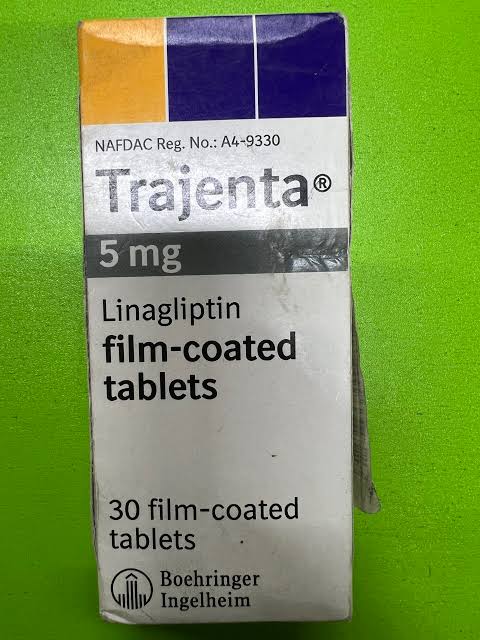
Trajenta (developed by Boehringer Ingelheim and Eli Lilly) is an oral, once-daily antihyperglycemic medication containing linagliptin. It belongs to the class of dipeptidyl peptidase-4 (DPP-4) inhibitors (also known as gliptins). Trajenta works by competitively and reversibly inhibiting the DPP-4 enzyme, preventing the degradation of endogenous incretin hormones—specifically glucagon-like peptide-1 (GLP-1) and glucose-dependent insulinotropic polypeptide (GIP).
By maintaining elevated physiological levels of active incretins, Trajenta induces two primary glucose-dependent actions:
-
Glucose-Dependent Insulin Secretion: Stimulates the release of insulin from pancreatic beta cells only when blood glucose levels are elevated.
-
Suppression of Glucagon: Inhibits excessive glucagon secretion from pancreatic alpha cells, reducing hepatic glucose output.
Because its action is strictly glucose-dependent, Trajenta demonstrates a very low risk of inducing hypoglycemia when used as monotherapy. A major key differentiator of linagliptin is its predominantly non-renal route of excretion (biliary/fecal), eliminating the need for dose adjustments in patients with declining kidney function.
Primary Medical Indications
Trajenta is indicated as an adjunct to diet and exercise to improve glycemic control in adult patients (aged 18 years and older) with type 2 diabetes mellitus:
-
Monotherapy: For patients in whom metformin is inappropriate due to intolerance or contraindications (e.g., severe renal impairment).
-
Dual Therapy: In combination with metformin, a sulfonylurea, an SGLT2 inhibitor, or a PPAR$\gamma$ agonist (e.g., pioglitazone) when monotherapy does not yield adequate glycemic control.
-
Triple Therapy / Complex Regimens: Combined with metformin and a sulfonylurea, or as add-on therapy to basal or bolus insulin regimens.
-
Patients with Renal Impairment: Preferred DPP-4 inhibitor option for individuals with mild, moderate, severe, or end-stage renal disease (ESRD) on hemodialysis.
Key Product Specifications & Dosing Forms
| Feature | Specification |
| Active Ingredient | Linagliptin |
| Pharmacological Class | Dipeptidyl Peptidase-4 (DPP-4) Inhibitor |
| Available Formulations | Film-coated oral tablets |
| Common Strengths | 5 mg tablets |
| Standard Dosage | 5 mg once daily, taken with or without food at any time of day |
| Renal Dose Adjustment | None required (suitable for all stages of renal impairment without dose titration) |
Critical Safety Guidelines & Precautions
-
Acute Pancreatitis Warning: Cases of acute pancreatitis have been reported in patients receiving DPP-4 inhibitors. Instruct patients to report symptoms of persistent, severe abdominal pain (often radiating to the back, with or without vomiting) immediately, and discontinue Trajenta if pancreatitis is suspected.
-
Hypoglycemia Risk in Combination Regimens: While Trajenta monotherapy carries a low risk of hypoglycemia, adding it to insulin secretagogues (e.g., sulfonylureas) or exogenous insulin increases the risk of low blood sugar. A reduction in the dose of the sulfonylurea or insulin may be required.
-
Bullous Pemphigoid: Rare cases of bullous pemphigoid requiring hospitalization have been reported with DPP-4 inhibitors. Patients should be advised to contact their physician if they develop severe blisters or skin erosions.
-
Severe Joint Pain: Severe and disabling arthralgia has been reported with this class of drugs. Symptoms typically resolve upon drug discontinuation.
-
Heart Failure Considerations: Monitor patients with pre-existing cardiovascular or renal disease for signs of heart failure (such as shortness of breath, sudden weight gain, or lower extremity edema).
-
Not for Type 1 Diabetes: Trajenta is ineffective in type 1 diabetes mellitus and must not be used to treat diabetic ketoacidosis (DKA).








Reviews
There are no reviews yet.