
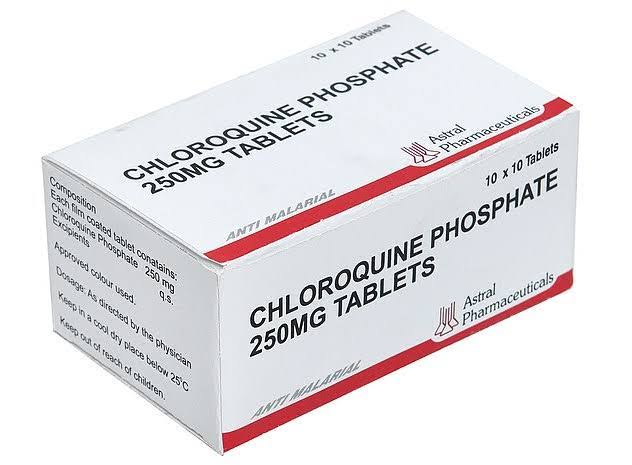
Chloroquine (commonly prescribed as chloroquine phosphate or chloroquine sulfate) is a synthetic 4-aminoquinoline compound historically established as a mainstay antimalarial and immunomodulatory agent.
-
Antimalarial Mechanism: Chloroquine acts on the erythrocytic stage of susceptible Plasmodium parasites. It enters the parasite’s acidic food vacuole and binds to free heme (a toxic byproduct of hemoglobin digestion), preventing its polymerization into non-toxic hemozoin crystals. The accumulation of unpolymerized, toxic heme destroys parasitic membranes and leads to rapid cell lysis.
-
Immunomodulatory Mechanism: Beyond parasitology, chloroquine raises the intra-vesicular pH within antigen-presenting cells and lysosome structures, inhibiting autoantigen processing and downregulating inflammatory cytokine production (such as TNF-alpha and IL-6).
Due to widespread resistance developed by Plasmodium falciparum, chloroquine is no longer used as a first-line treatment for P. falciparum in most endemic regions, but it remains critical for treating sensitive strains (P. vivax, P. ovale, P. malariae) and managing specific autoimmune conditions.
Primary Medical Indications
Chloroquine is indicated for adult and pediatric populations across parasitological and rheumatological disorders:
-
Treatment of Sensitive Malaria: First-line treatment for acute, uncomplicated malaria caused by susceptible strains of Plasmodium vivax, Plasmodium ovale, Plasmodium malariae, and Plasmodium knowlesi.
-
Prophylaxis of Sensitive Malaria: Used as a suppressive prophylactic agent for travelers visiting regions with confirmed chloroquine-sensitive malaria parasites.
-
Hepatic Amebiasis: Indicated as an adjunct to amebicides (such as metronidazole) for the treatment of extraintestinal amebiasis and liver abscesses caused by Entamoeba histolytica.
-
Rheumatoid Arthritis & Systemic Lupus Erythematosus (SLE): Second-line disease-modifying antirheumatic drug (DMARD) used to reduce joint inflammation, cutaneous flare-ups, and systemic disease activity when first-line therapies are insufficient.
Key Product Specifications & Dosing Forms
| Feature | Specification |
| Active Ingredient | Chloroquine phosphate or Chloroquine sulfate |
| Pharmacological Class | 4-aminoquinoline Antimalarial / DMARD |
| Available Formulations | Oral tablets, oral syrup/suspension, solution for injection (IV/IM) |
| Common Strengths | Tablets: 250 mg chloroquine phosphate (equivalent to 150 mg chloroquine base) or 500 mg chloroquine phosphate (equivalent to 300 mg chloroquine base) |
| Standard Malaria Treatment |
Acute Attack (Total 2,500 mg salt / 1,500 mg base over 3 days): • Day 1: Initial dose of 1,000 mg salt (600 mg base), followed by 500 mg salt (300 mg base) 6 hours later • Day 2: 500 mg salt (300 mg base) as a single dose • Day 3: 500 mg salt (300 mg base) as a single dose |
| Prophylaxis Regimen | 500 mg salt (300 mg base) once weekly on the same day each week, starting 1–2 weeks before entering an endemic area, continuing weekly during stay, and for 4 weeks after leaving |
| Administration | Take orally with food or milk to reduce gastrointestinal side effects like nausea and stomach cramps |
Critical Safety Guidelines & Precautions
-
Widespread P. falciparum Resistance: Do not use chloroquine for empiric treatment or prophylaxis of Plasmodium falciparum malaria unless local surveillance explicitly confirms full chloroquine sensitivity. Most global P. falciparum strains possess the pfcrt mutation conferring high-level resistance.
-
Irreversible Retinopathy (Ocular Toxicity): Long-term high-dose therapy (common in autoimmune treatment) can cause retinal pigment changes and irreversible visual field loss (“bull’s-eye” maculopathy). Baseline and periodic ophthalmic examinations (e.g., optical coherence tomography, automated visual fields) are mandatory for prolonged regimens.
-
Cardiac Effects & QTc Prolongation: Chloroquine has quinidine-like electrophysiological properties. High doses or co-administration with other QT-prolonging drugs can precipitate QTc prolongation, torsades de pointes, ventricular arrhythmias, or cardiomyopathy.
-
Psoriasis & Porphyria Exacerbation: Contraindicated or used with extreme caution in patients with psoriasis or porphyria cutanea tarda, as chloroquine can trigger severe disease flares or acute cutaneous eruptions.
-
G6PD Deficiency Caution: Although less hemolytic than primaquine, high doses may precipitate acute hemolytic anemia in individuals with severe glucose-6-phosphate dehydrogenase (G6PD) deficiency.
-
Prophylaxis vs. Radical Cure: Chloroquine targets only the blood stage (erythrocytic schizonts) of P. vivax and P. ovale. It does not destroy dormant liver hypnozoites; radical cure to prevent relapse requires concomitant administration of primaquine or tafenoquine.







Reviews
There are no reviews yet.