
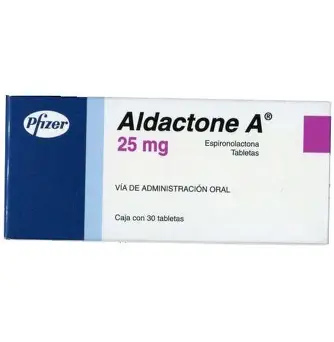
Aldactone is a brand-name cardiovascular and diuretic medication containing the active ingredient spironolactone. It belongs to the class of potassium-sparing diuretics and acts specifically as an aldosterone antagonist. Unlike conventional loop or thiazide diuretics that promote potassium loss, Aldactone helps the body retain potassium while eliminating excess water and sodium through urine.
Active Ingredient & Mechanism of Action
-
Active Ingredient: Spironolactone.
-
Mechanism: Spironolactone competitively blocks the action of aldosterone—a hormone produced by the adrenal glands that signals the kidneys to retain sodium/water and excrete potassium. By inhibiting aldosterone receptors in the distal renal tubules, Aldactone:
-
Increases urine output and excretion of sodium and fluid, reducing overall intravascular fluid volume and systemic blood pressure.
-
Inhibits potassium excretion, preserving blood potassium levels.
-
Prevents vascular and myocardial fibrosis driven by excess aldosterone activity in chronic heart failure.
-
Dosage Forms & Available Strengths
Aldactone is supplied as oral film-coated tablets in three standard strengths:
-
Aldactone 25 mg Tablets
-
Aldactone 50 mg Tablets
-
Aldactone 100 mg Tablets
Clinical Indications
Aldactone is indicated for:
-
Congestive Heart Failure: Used in combination with standard heart failure therapies (e.g., ACE inhibitors, beta-blockers) to manage fluid overload, improve survival, and reduce hospitalizations.
-
Essential Hypertension: Used primarily as add-on therapy for hard-to-control or resistant high blood pressure.
-
Edema Associated with Hepatic Cirrhosis or Nephrotic Syndrome: Management of fluid retention and ascites in liver disease or kidney-related swelling.
-
Primary Hyperaldosteronism: Short-term preoperative treatment or long-term management in patients with adrenal tumors/hyperplasia producing excess aldosterone.
-
Off-Label Dermatological Uses: Frequently used off-label in dermatology to treat hormonal acne, female pattern hair loss, and hirsutism due to its anti-androgenic secondary properties.
Key Pharmacokinetics
-
Absorption: Rapidly absorbed following oral administration. Bioavailability increases when taken with meals.
-
Metabolism: Metabolized extensively by the liver into active metabolites, including canrenone, which accounts for much of its therapeutic effect.
-
Elimination: Excreted primarily through urine and secondarily via bile.
Administration Guidelines
-
Usage: Administered orally once daily or in divided doses as prescribed, preferably with food to maximize absorption and reduce gastric upset.
-
Consistency: Should be taken consistently around the same time each day (ideally in the morning or early afternoon to prevent sleep interruption from night-time urination).
Safety Profile & Considerations
-
Common Side Effects: Dizziness, headache, nausea, hyperkalemia (high blood potassium levels), and menstrual irregularities.
-
Endocrine Side Effects: Due to affinity for progesterone and androgen receptors, long-term or high-dose use may cause gynecomastia (breast tissue enlargement in men), breast tenderness, or erectile dysfunction.
-
Contraindications:
-
Severe renal failure, acute kidney injury, or anuria.
-
Pre-existing hyperkalemia (high potassium levels).
-
Addison’s disease.
-
Concomitant use with eplerenone.
-
-
Key Drug Interactions:
-
Potassium Supplements & ACE Inhibitors/ARBs: Significantly elevates the risk of severe, life-threatening hyperkalemia. Regular serum potassium monitoring is required.
-
NSAIDs: May reduce diuretic efficacy and increase the risk of acute renal toxicity.
-
Digoxin: Spironolactone can increase serum digoxin half-life and interfere with certain digoxin assays.
-
Note: Aldactone is a prescription-only medication. Dose adjustments and routine monitoring of blood electrolytes and kidney function must be conducted under the supervision of a licensed healthcare provider.






Reviews
There are no reviews yet.